
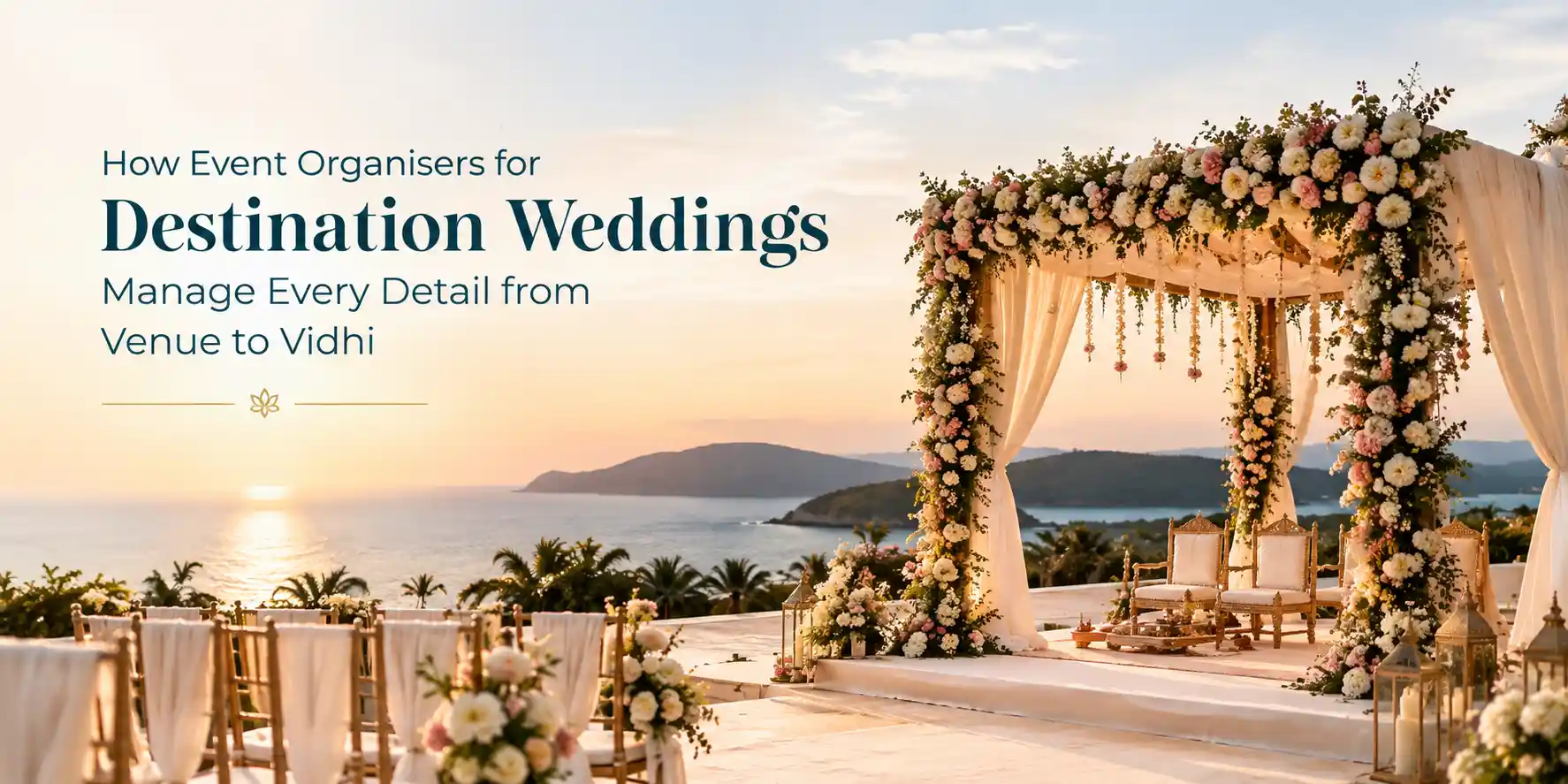
A destination wedding is more than simply choosing a beautiful location and bringing your family there. It involves venue coordination, guest arrangements, décor, ceremonies, vendors, transportation, timelines, and countless small details that need to come together perfectly.
This is where event organisers for destination wedding celebrations play an important role. Instead of managing every supplier and activity yourself, couples can rely on experienced professionals to coordinate the different elements of the celebration.
From selecting the venue to arranging the Vidhi, professional event organisers help turn a destination wedding plan into a well-organised and memorable experience.
What Do Event Organisers for Destination Weddings Actually Do?
A destination wedding usually takes place away from the couple’s hometown. This means planning becomes more complicated because the couple and their families may not be familiar with the venue, local suppliers, logistics, or available services.
Professional event organisers for destination wedding celebrations can coordinate these requirements from the initial planning stage through the final ceremony.
Their responsibilities may include:
- Destination and venue coordination
- Wedding décor and theme planning
- Vendor coordination
- Guest arrival and hospitality arrangements
- Transportation coordination
- Ceremony planning
- Stage and mandap setup
- Flower and lighting arrangements
- Event schedules and timelines
- On-site coordination
- Managing last-minute requirements
The goal is simple: the family enjoys the wedding while the event team manages the execution.
1. Venue Selection and Coordination
The venue is one of the most important decisions in a destination wedding.
Whether it is a resort, heritage property, banquet venue, farmhouse, or another destination, the venue needs to work for the number of guests and the planned ceremonies.
Event organisers can help evaluate practical requirements such as:
- Guest accommodation
- Ceremony spaces
- Dining areas
- Indoor and outdoor options
- Décor restrictions
- Power and technical facilities
- Parking and accessibility
- Setup and dismantling time
They also coordinate with the venue team to make sure different wedding functions can be executed according to the planned schedule.
2. Creating a Wedding Décor Concept
Destination weddings often have multiple functions, and each event may require a different visual identity.
For example, the couple may want:
- A colourful Haldi setup
- A floral Mehndi décor
- An elegant engagement backdrop
- A traditional wedding mandap
- A sophisticated reception stage
Professional event organisers work with decorators to create a consistent design direction while giving every function its own character.
For a destination wedding, décor planning also needs to consider the existing architecture and surroundings. A good setup should complement the venue rather than simply filling the space with decorations.
3. Guest Management and Hospitality
When guests travel to another city or destination for a wedding, hospitality becomes especially important.
An event organiser can help coordinate details such as:
- Guest arrival schedules
- Hotel room allocation
- Welcome arrangements
- Transportation
- Function timings
- Meal schedules
- Family requirements
- Information about different ceremonies
This helps guests know where they need to be and when, while the family does not have to answer every logistical question throughout the celebration.
4. Coordinating Multiple Vendors
A destination wedding may involve several different vendors working simultaneously.
These can include:
- Decorators
- Caterers
- Photographers
- Makeup artists
- Entertainment teams
- DJs
- Florists
- Lighting and technical teams
- Transportation providers
- Furniture suppliers
Managing all these vendors independently can become difficult, particularly when the event takes place in an unfamiliar destination.
Professional event organisers coordinate these teams, communicate timelines, and make sure different vendors can work together without interfering with one another.
5. Planning Every Wedding Ceremony
Indian weddings can involve several traditional ceremonies, each with its own requirements.
The Vidhi, for example, may require a specific seating arrangement, mandap or Chauri setup, sacred ceremony space, floral decoration, lighting, and appropriate placement for family members.
Other functions may require completely different layouts.
An experienced event organiser creates a schedule for each ceremony and coordinates the setup accordingly.
This is particularly valuable when several functions are happening across the same day or over multiple days.
6. Managing the Vidhi and Mandap Setup
The wedding ceremony is often the central moment of the entire celebration.
The mandap needs to be visually appealing while remaining practical for the couple, family members, priests, photographers, and guests.
Event organisers coordinate details such as:
- Mandap design
- Floral arrangements
- Seating
- Lighting
- Stage or platform requirements
- Ceremony-related setup
- Guest visibility
- Photography requirements
A professionally coordinated Vidhi setup helps ensure that the ceremony can proceed smoothly without unnecessary interruptions.
7. Creating a Detailed Event Timeline
Destination weddings often include several events across one or more days.
A typical schedule might include:
Day 1: Guest arrival and welcome
Day 2: Haldi and Mehndi
Day 3: Wedding ceremony and reception
Day 4: Departure
The exact schedule depends on the couple and destination.
Event organisers create detailed timelines covering setup, vendor arrival, guest movement, ceremonies, meals, entertainment, photography, and dismantling.
This behind-the-scenes planning allows the wedding celebrations to feel effortless for guests.
8. Handling Last-Minute Changes
Even the most carefully planned destination wedding can experience unexpected changes.
Weather conditions may change an outdoor setup. A vendor may require additional time. Guest arrival schedules may shift. A ceremony may run longer than expected.
Professional event organisers remain available on-site to coordinate such changes and communicate with the relevant teams.
Instead of the family trying to solve every issue themselves, the event team can take responsibility for coordinating the necessary adjustments.
9. Coordinating Décor With the Destination
One advantage of a destination wedding is the opportunity to use the location itself as part of the celebration.
For example, a venue with gardens, open spaces, traditional architecture, or scenic surroundings can become part of the décor concept.
Event organisers and decorators can plan:
- Entrance décor
- Floral pathways
- Ceremony backdrops
- Mandap designs
- Stage décor
- Dining-area decoration
- Lighting
- Photo opportunities
The objective is to make the décor feel connected to the destination rather than looking like a generic wedding setup.
Why Choose Janta Decorators for Destination Wedding Events?
With extensive experience in wedding and event decoration, Janta Decorators provides professional support for couples looking to create beautifully coordinated wedding celebrations.
Based in Ahmedabad, Janta Decorators works across different wedding functions and décor requirements, including wedding ceremonies, receptions, Haldi, Mehndi, Vidhi Mandaps, stage backdrops, entrance decoration, floral arrangements, and other event setups.
For destination weddings, having an experienced decoration and event partner can make coordination easier, particularly when multiple functions and décor requirements need to be managed.
The team focuses on understanding the couple’s requirements and creating décor concepts that suit the venue, ceremony, theme, and overall wedding experience.
Tips for Choosing Event Organisers for Your Destination Wedding
Before selecting an event organiser, couples should consider:
Check Previous Work
Look at photographs and examples of weddings they have managed or decorated. This can give you an idea of their style and execution quality.
Discuss the Complete Scope
Ask exactly what the organiser will manage. Clarify whether their services include décor, vendor coordination, guest management, logistics, and on-site supervision.
Understand the Budget
Discuss the complete budget at the beginning and clarify what is included and what may involve additional costs.
Ask About Destination Experience
If your wedding is outside your hometown, experience with destination events can be particularly useful.
Discuss the Timeline
Make sure the organiser understands your wedding dates, number of functions, venue requirements, and setup deadlines.
Final Thoughts
A destination wedding should be about celebrating with your family and creating unforgettable memories, not constantly worrying about vendors, timelines, décor, and logistics.
Professional event organisers for destination wedding celebrations bring together multiple aspects of the event, from venue coordination and décor to guest management, vendor coordination, and Vidhi arrangements.
With the right planning partner, every ceremony can have its own identity while the complete wedding maintains a smooth and consistent experience.
For couples planning a destination wedding from Ahmedabad or Gujarat, Janta Decorators can help transform wedding ideas into thoughtfully planned and beautifully decorated celebrations.